Saturday, March 21, 2015

Woyzeck - Georg Büchner


I'm going to try very hard not to make this an ode to John Reddick, but it will be difficult because I can not fathom Büchner without him. (Also he dedicates this book to Sarah, who missed out last time by not yet existing...need I say more? Obviously he's the man.)

But to get back to Woyzeck, here is a play that is barely 30 pages long, with even more of Büchner's trademark brevity than usual. Before his play could be finished, while in Zurich, Büchner had contracted typhus and became a statistic in what had become an epidemic. What he left behind was a fragmented play in four folios without chronology or even a cast of characters. While this is an editor's nightmare, it is also the perfect opportunity to shine and Reddick brings to life the skeleton that Büchner left behind.

In a nutshell, Woyzeck is a play about a crime of passion; Woyzeck, suspecting his mistress is cheating on him, murders her in cold blood.  But of course, it is not that simple. Büchner is interested in a specific question: "Are people truly in control of their actions and therefore accountable for them? Or are they driven willy-nilly by inner compulsions and/or outer circumstance - by their elemental natures, by visions and illusions, by ambition or convention, by poverty and exploitations?" (Notes, pg.251)

Reddick cautions the reader to avoid the trap of viewing Woyzeck as a victim, but this is extremely hard to do for a variety of reasons.

The play opens with Woyzeck and his friend Andres cutting canes, presumably for corporal punishment. Both are the lowest ranking soldier and as such make up the dregs of society. Woyzeck supplements his minimal income by shaving his officers and taking part in a medical trial that involves exclusively eating peas.

Immediately we are aware that all is not right with our hero, he obviously suffers from paranoid delusions; his conversation is peppered with the fear of Freemasons and obscure biblical references. The opening line sets the tone:

Woyzeck: Yes, Andres: that streak there over the grass, that's where the head rolls in the evenings; someone picked it up once, thought it was a hedgehog. Three days and three nights, and he was lying in his coffin. Andres, it was the Freemasons, that's it, the Freemasons - quiet!

Reddick mentions in his notes that not all versions start with this scene, but rather start with the shaving scene which Reddick places at scene 6. The brilliance of opening the play with this scene is the foreshadowing of heads rolling and the streak of blood in the grass, a more sinister beginning and one that allows the viewer to appreciate Woyzeck on his own merit. Despite Woyzeck's many flaws, he is a requisite worker and faithful provider for his girlfriend and their small boy. As Andres and Woyzeck run off for role call we are subsequently introduced to the girlfriend, Marie.

Marie is brazenly leaning out the window making eyes at the good looking, strapping and more importantly sane drum-major who happens to be marching by. She's a self professed tart, but when the neighbor woman calls her out on her ogling, she screams "Bitch!" and slams the window closed and comforts her poor misunderstood victimhood by monologging with her young son before she delves into a poetry recitation on the joys of imbibing.

Marie: Don't fret little 'un....You're just a poor little tart's kid, and you makes your mum happy with your bastard face...

Poignant. While she is lost in her poetry recitation, Woyzeck knocks on the window, spouts a bunch of illegible paranoid mumbo-jumbo and then races away. Clearly she has picked a winner. But while Reddick posits that Marie is more of a victim in this story than Woyzeck...I find this hard to believe. She is a passive victim, if anything, sitting around making eyes at whoever walks by and whining to her toddler about how alcohol is the only palliate.

In the next scene, Woyzeck seems to be taking Marie out for a stroll, they pass an old man and his beggarly child dancing and perhaps (the stage directions are far from clear) singing in unison: "In this world shall none abide, All of us we have to die, And well we know it too!"

Another glimmer of what's to come. Another harsh juxtaposition between what's being said and the action taking place on the stage. As they meander through the stalls and street vendors, a man pontificates: "Observe the forward march of civilization. Everything is making giant strides. A horse, a monkey, a canary. The monkey's already a soldier, though that's not saying much - the bottom-most species of human kind!"

A preoccupation with Büchner is the frustrating lack of societal progress. While "giant strides" are made, often they are in no particular direction. As discussed in Danton's Death, the forward march of civilization is more akin to a tsunami at times than a precisely ordered drill command. And while this showman spouts off his philosophical treatise, Woyzeck and Marie seem oblivious to his insults and the scene itself becomes a foil for the drum-major to walk by and make reciprocal eyes at Marie.

Drum-Major: Hell's teeth! Spawn whole regiments of cavalry she could, breed drum-majors by the dozen!

I'm not going to recreate every scene here, as much as I'm tempted to....but I do want to peripherally comment on the fact that Marie is a terrible mother. And I think this is important because it's part of her character, a lazy, apathetic, self professed whore. She has virtually no good qualities besides the theoretical ability to breed drum-majors. As evidence I present 'the bedtime ritual':

Marie: Sleep lad, sleep! Shut your eyes tight, go on, tighter, keep 'em like that and stay quiet or the bogeyman'll get yer. [sings] Hey lass now shut up the house, A gypsy boy's coming at last, To lead you away by the hand, Off into gypsy land.

Obviously not a parenting style to emulate. But is this perhaps more foreshadowing? Is Woyzeck none other than the bogeyman, come to lead Marie rather than the child "off into gypsy land"?

Marie: Quiet child, shut your eyes, the sandman's coming! See him run along the wall? [She dazzles him with her mirror.] Keep 'em shut or he'll look in your eyes and turn you blind.

The second she finishes her version of a lullaby, who appears, like an aberration (or the sandman) but good old Woyzeck to drop of some of his pea money (we'll get to this later,) he notices the poor boy is hunched over and sweating and although he doesn't do anything, at least he comments on his son in a somewhat caring way, which is more than we can say for Marie, who is obviously suffering from depression. As Woyzeck leaves, Marie calls out "God bless you Franz," and then quietly monologues about the futility of suicide.

Scene 6. I said I wasn't going to do this, but it's just too good to not comment on absolutely everything. I think the reason that this scene would be a logical choice for the beginning scene is that we are given more context into Woyzeck's world, and as the curtain is pulled aside, it is a dreary, humiliating existence. While Woyzeck carefully shaves the face of his officer, his superior prattles away with one insulting comment after another, "God, you're so stupid, so abysmally stupid...", leads into a discussion on the regrettable choice of having a child out of wedlock.  Woyzeck defends himself by saying that without money, morality is a luxury. And the officer as an echo of Robespierre expounds on the benefits of virtue:

Officer:...But Woyzeck, virtue, virtue! How else could I ever cope with time?

The officer, manic and delusional pats Woyzeck on the back, tells him to run along and pays him his fee, which Woyzeck dutifully brings to Marie.

Ok, summarizing: Scene 7: the drum-major and Marie continue their flirtation with more explicit discussion of breeding little drum-majors like rabbits. Our drum-major is obviously a one trick pony, and while perhaps his lucidity and 'beard like a lion' are enough of a red-herring to make her believe she's found someone to hitch her lucky star to, in reality he is little more than a John looking for a fix. When he asks her if the devil is in her eyes, her response is: "Don't care if it is. What the hell." Marie lacks agency in a big way. While Marion at least was given a monologue to present her case, ie her nature ordained decent into prostitution, arguing that fidelity was an incommensurable paradigm for those euphemistically like an ocean, insatiably devouring everything only to demand more...Marie can't work up enough gumption to care one way or another.

Eventually the officer decides to up his game and openly goads Woyzeck by insinuating that Marie is being unfaithful. While Woyzeck is willing to endure one humiliation after another, this is going too far.  Marie is the only thing that he clings to and the seed that is sown finds itself germinating in rich paranoid soil.  When Woyzeck confront Marie, granted, in his crazed sort of oblique way, she shrugs and cockily responds "And what if I did?"

The next scene is an exhibit of the humiliation Woyzeck must continue to endure. Brought before a panel of doctors initially there to examine a cat which he is holding, he finds himself the object of observation after the cat runs away. The doctors poke and prod, observing what a diet exclusively comprised of peas can do to one's complexion.

Doctor: You animal, do you want me to waggle your ears? Are you trying the cat's trick? There gentlemen; what we have here is throw back to the ass, often brought about by excessive childhood exposure to women and a vulgar mother tongue. How much hair did your tender loving mother tear out for a keepsake then? Your hair has gone so thin these last few days; yes, gentlemen, it's the peas.

Goaded by his officer, goaded by Marie, and insulted by his circumstances, he has no solid footing to fall back on. As he clutches at the straws of his lucidity he is finally goaded by his insanity as the many voices in his head demand he kill Marie.

Even thus goaded, he still has the composure to make sure one last time that his suspicions are well founded. He asks around about the drum-major and finally confronts him only to be beaten and further humiliated. He buys the cheapest knife he can find, for two groschen, the same price he earns from his pea enterprise and hastens to away perform the act he is destined to carry out.

Reddick suggests Marie is the victim because she is the one "being done unto" rather than doing. But I find myself on the fence with this line of reasoning. For a man who talks about how the poor have no need for morality or virtue, when the woman he refuses to marry is unfaithful all of a sudden he demands justice for her lack of morality. This seems disingenuous. He is not a hero enacting justice, but rather a crazy man able to assuage all the voices that whisper epithets except that of rage. He can be humiliated by his superiors, but not his mistress, even the poor have standards and so like Phaedra or Theseus, he takes his place among the many felled by Venus.

Tuesday, March 10, 2015

Clarissa - Samuel Richardson

One of the most engaging books I've read recently (obviously not on the Canon) was Gillian Flynn's Gone Girl. At first I thought it was a treatise on marriage and found myself looking at the crumbling marriage with sympathy, occasionally uttering a "too true..." Until Nick's phone rings and he doesn't answer it and we realize we have an unreliable narrator. Then everything is turned upside down and the reader must attempt to parse reality from the sticky web of lies, fencing one's emotions and allegiances. Of course Amy is crazy - but the craziness stems from a desire to teach Nick a lesson. In a way, our villain, wrestles with the same objective, only instead of teaching a singular person a lesson, his vendetta is against women as a whole with Clarissa acting as resident scapegoat.

Clarissa in a way follows the same formula that Flynn takes in Gone Girl, or Nabokov takes in Lolita...can a reader be persuaded to sympathize with a reprobate?

Clarissa's plight is that she is too good, too dutiful and a touch spineless. Bequeathed a considerable fortune from her grandfather's death, she has the potential to be independent from the beginning, making this whole 1500 page book a moot point. Yet because she has such veracity and would rather offer olive branches than pursue her independence, the history of this young lady becomes a long drawn out tragedy of "what ifs".

Told in epistolary from, the first letter from Miss Anna Howe begins thus: "I am extremely concerned, my dearest friend, for the disturbances that have happened in your family." And we are thrown into the plot immediately. Robert Lovelace, after briefly courting Clarissa's sister Arabella, while Clarissa was out of town, upon her arrival home does a one-eighty in his affections and chooses to pursue the younger more beautiful Clarissa.

Obviously this does not go over well with Arabella and after a pretense of any kind is discovered, James the brother and up-and-coming patriarch of the family decides he must force Lovelace to duel. Lovelace is a much better swordsmen and the duel does not go according to plan although it is ended prematurely as Lovelace shouts something about valuing his little sister enough not to run him through, and James is left defeated emotionally and without honor. If Clarissa is what Lovelace wants, James will do everything in his power to make sure this does not happen.

The fortune left to her by her grandfather, and the favor of her two uncles only adds to estrange her further from her siblings who in turn hate and despise her. Their solution is to marry her off to the most illiterate, repugnant, gouty hag (can men be hags?) Mr. Solmes. Clarissa has begged to be allowed to live a life of celibacy, throwing into the bargain becoming her brother's housekeeper with the understanding that he will treat her little better than a servant. This is her preference. But out of spite, the brother rallies the family around him and they demand that Clarissa cede her preference out of obligation to the family.

An obligatory description of Solmes: "It was, however, [Solmes] laugh; for his first in three years, at least, I imagine, must have been one continual fit of crying; and his muscles have never yet been able to recover a risible tone. His very smile...is so little natural to his features, that it appears in him as hideous as the grin of a man in malice."

So Solmes is awkward, unattractive and a little dense, but is he really that bad? Clarissa profusely objects to this match and says repeatedly that she would choose death over this man. Unbeknownst to her is how close she comes to the truth.

Eventually (over the course of 400 painful pages) she has become a prisoner in her own room and her family demands that she cease all letter writing. Much to the chagrin of the reader this does not happen. Instead she writes letter after letter to Miss Howe and now Lovelace. Most of her letters to Lovelace are about how "this is the last letter she is going to write him and she would appreciate it if he respects this request."  Her letters to Miss Howe are more along the lines of "I hate Solmes, and Lovelace is a rake...I wish everyone would let me live alone in peace or join a convent...but it looks like I may be forced into the protection of one of these horrible options."

Lovelace at first seems justified in his pursuit, obviously who wouldn't want Clarissa? She's gorgeous, well established, relentlessly pursues charity and even has an account of her time budgeted in a way that would make even a compulsive salivate. Is he really all that bad? In letter 4 (50 pages in) Clarissa describes him to Miss Howe for the readers benefit as follows:

"...always noted for his vivacity and courage; and no less, it seems for the swift and surprising progress he made in all parts of literature; for diligence in his studies, in the hours of study, he had hardly an equal..."

Clarissa blames her brother's overt hatred on the fact that he recognizes his superior in Lovelace, and for about 400 pages there is a bit of consideration whether or not Lovelace is really all that bad. Sure he has a reputation of a degenerate rake, but he's young and wealthy...who doesn't? Sure there's an aura of disquiet that seems somewhat sinister...but at least he's up on all the classics? While Miss Howe prompts and teases that perhaps Clarissa is lying to herself, perhaps there is no one other than Lovelace she could even consider, Clarissa herself is almost convinced.

And then she is pushed into a corner. Her parents demand she marry the hated Solmes ASAP, as in Wednesday, and after bartering her time and submission, she has no other cards to play besides basic hope. She writes Lovelace a letter telling him she'll meet him outside the gate so that he can take her to a respectably safe distance where she can then, from her copious and persuasive letter writing, convince her family that she would like to join a convent, or live a life of charity and peace secluded in the country. But then after another 100 pages, she changes her mind and decides not to go with Lovelace at all and writes another letter saying basically that, leaving it in the little crack in the wall where it remains untouched and unread. So then of course when Lovelace comes to take her way, she is obligated to go outside the gate and say "just kidding- I'm not coming after all...bye?!" To which he replies by falling down on his knees and frothing at the mouth professing his undying love, until a servant comes running at them shouting "get your arms! Clarissa has eloped with the reprobate!!"

Clarissa is duly terrified and Lovelace works the terror and adrenaline into his favor and whisks her away.

Her fear, and greatest hesitation about actually eloping with Lovelace is that she thinks him a "vain man, capable of triumphing, secretly at least, over a person whose heart he thinks he has engaged." (page 72) Sadly, this is the actual plot of the book.

150 pages in we finally hear from Lovelace for the first time: "I have boasted that I was once in love before: and indeed I thought I was. It was in my early manhood - with that quality-jilt, whose infidelity I have vowed to revenge upon as many of the sex as shall come into my power. I believe, in different climes, I have already sacrificed a hecatomb to my Nemesis in pursuance of this vow."

That's Lovelace in a nutshell. Bent on avenging himself on all women. Later while defending himself to his friend John Belford, he essentially says "I don't know what all the fuss is about, each time I knock someone up I always provide a good midwife for the birth and make sure to provide enough to meagerly get by on until I can find a suitable spouse to pawn her off to...isn't that the gentlemanly thing to do?

Slowly, the narrative spirals down hill in a truly modern way. For a book published in 1747 there is an element of vindictive meanness that is somewhat surprising. Like Nick and Amy, able to anticipate each others next move and notice the malicious subtleties that might pass by the unsuspecting, Clarissa and Lovelace are the only two people destined to cause one another the most possible pain and heartache.  Although Clarissa is unable to anticipate the next move in the intricate web of deceit Lovelace is always gloating over, she is capable of instantly recognizing his motives.

Lovelace has decided there's no such thing as a virtuous woman and has made it his life's purpose to try Clarissa's virtue with all the intrigue and web of lies he can skillfully weave. Test after test proves Clarissa to be only more admirable, more chaste and ultimately more virtuous. What? This can not be! Lovelace decides this plan is boring and may take forever...why not date rape her (minus the date but with plenty of drugs so she is requisitely unconscious!) and then see how she'll behave. If he can a) further induce her to forgive him and decide to live with him as a mistress that would be sweet or b) decide maybe it's not all that bad - but she needs to be married ASAP and then he can put up a wedding farce so that she thinks they are married and he can live with her as a mistress.

Throughout this whole book Anna Howe is far from helpful. While she's always offering to come for a visit (to the brothel where Clarissa is imprisoned) and send her money or do anything of value she always ends her offer with "let me just check with my mom." Which of course then turns into "mom and I had a huge fight about the whole thing, mom thinks you're probably enjoying yourself and you definitely did not listen to your parents (a big no no!) so at this point all that help I just offered is a no go." While Clarissa finds herself in one trying disastrous catastrophe after another, Miss Howe's responses are akin to "wow, that is so horrible for you! Yikes! Maybe I will pursue a life of celibacy after all...or I could marry Mr. Hickman who's such a bore...but I think I'll just think about everything for a few months until all decisions are moot and void...Love ya!"

Eventually Clarissa escapes from the brothel that Lovelace has brought her to/imprisoned her in and after an accidental stint in prison becomes increasingly sickly.

So begins the test: Lovelace becomes increasingly distraught over what he has done and the fear of losing his one true blah blah blah...he vows a life of virtue and integrity and even suffers a bout of illness himself that takes him to the cusp of insanity.  Throughout his brief if yet not entirely disingenuous reformation, John Belford writes him letters saying "How could you try such a virtuous angel of a woman like Clarissa? She is so near perfection she's barely human, um I think you basically date raped an angel! You had better feel seriously bad about this and change your way of life stat. I am disgusted at who you are as a person, but since I never stopped you when you appraised me of your very detailed plan of mortification I also feel slightly complicit in this poor angels downfall...therefore I have just enough spine to write you endless letters...but not enough to be actually helpful. Get well soon!"

Eventually, even Samuel Richardson is annoyed/tired with Lovelace and decides that despite that fact that dueling is considered poor form, and despite the fact that Clarissa explicitly "forgives everyone and demands they all live in perfect harmony..." he can not let this villainous rake get away with it by simply "reforming" and devoting his life to charity. Instead after about a nanosecond of almost genuine remorse, he decides he has a gift, and that is being a rake! He's so good at what he does! So he skips off the island (Great Britain) for a bit to galavant around, presumably looking for more maidens to defile until Colonel Morden finally shows up (only after waiting for him for 1000 pages) and decides as much as he loves Clarissa and as much as he mostly honors all of her wishes...he can not let Lovelace get away with defiling the gem and pride of humanity. They duel. Lovelace is caught off guard. The End

In the end there is nothing even close to sympathy for Lovelace. He is pure unadulterated evil to Clarissa's pure unadulterated goodness. While evil may prevail in this life, life is not the end for the righteous and we're left to recognize that he will live an eternity in hell-stone and fire, an eternity of regret and remorse with small breaks in-between for gnashing of teeth; while Clarissa floats to heaven in peace and joy, enraptured by her ability to forgive and for God's grace.

Still, for the third longest book in the English language, the end feels sort of rushed. I wish that Lovelace had to suffer a few more tangible humiliations...like being put into the stocks naked in the town square and having rats chew off his appendages...or something.

I can not say that I enjoyed this book. There were moments that were actually really engaging and all I wanted to do was hide in a hole (from my 2 year old) and read for hours...but eventually that feeling would subside and I would realize I still had 1000 pages to go. The thing that is interesting about this book though is how it anticipates all books in which a villain carefully and intricately plots the hero's demise. That being said it probably would have been better as a novella.

Tuesday, February 10, 2015

Danton's Death - Georg Büchner

This is one of the most complex plays I have read. Published in 1835, Büchner was a modernist decades before that movement garnered traction; his writing style is a mosaic of ideas and themes, the sacred and profane harshly juxtaposed within the same space. While the plot is somewhat straightforward, Danton, a hero of the French Revolution has outworn his welcome and the masses (goaded by Robespierre) demand his beheading, what gives the play its substance is the political maelstrom these characters find themselves drowning in.

Historically, this play takes place over the course of thirteen days during the last violent shuddering of the Revolution, March 24 - April 5 of 1794. At this point the Revolution is steeped in failure; the carnage of a broken system is evident in every scene.

Georges Danton was a brilliant lawyer and orator and for three months the leader of the revolutionary government. Being exhausted by the never ending bloodshed, he has turned his position to one favoring negotiation and seeking governmental stabilization, which immediately labels him as an indulgent. It is not long before a ruse is invented to get him out of the way. As the play opens, he has become disillusioned and jaded by the incessant and now seemingly trivial bloodletting and has fallen into a stupor of nihilism.

 Scene 1: An unidentified room of ill repute. Herault is at a gambling table surrounded by prostitutes, while Danton and his wife Julie site nearby discussing philosophy.

Danton: Look at the pretty lady: handles her cards like a real little angel! She certainly knows how to play her suits: shows her heart to her husband, so they say - and her 'diamond' to her lovers. You women, you could make a man fall in love with lies.

Julie: Do you believe in me?

Danton: How should I know? We know damn all about each other. Thick-skinned elephants, that's what we are; we stretch out our hands to each other, but it's a waste of time, hide grating on hide, that's all- we're on our own, completely on our own.

Danton is described as a mastiff of a man, energetic, and mercurial. He enjoyed the sensual pleasures life had to offer and the first two times we see him he is in the presence of prostitutes, the first time incidentally.

In the first scene, it is left to Danton's friend Herault, to lay out the contentious ideology of the Dantonists:

Herault:...The revolution must end and the Republic must begin. The basic principles of the state must change: instead of duties - rights; instead of virtue - well-being; instead of punishment - protection. Everyone must be able to come fully into their own and assert their own nature. No matter whether they're reasonable or unreasonable, educated or uneducated, good or bad: that's no business of the state's. We're all idiots and no one else has the right to inflict his own particular idiocy on anyone else....

This statement is in direct opposition to Robespierre's dogmatic stance, and so we are introduced to the contention: is the basic principle of the state rights, well-being and protection or is it to ensure a higher system of values and morals by which all citizens must abide.

Robespierre's version of things is closer to "There are only two kinds of citizens: the good and the bad. The Republic owes to the good its protection and to the bad it owes only death." (note 101)

As Herault finishes pontificating in the brothel, Danton asks who will champion this cause? How will such policy be put into action? The answer he is given is: "why us and the honest folk of France!" To which Danton responds without much enthusiasm: "Your 'and' is a very long word..."

Within seconds we are introduced to these 'honest folk of France' in the form of a husband and wife in the middle of a marital dispute brought on by a bought of drinking. A crowd forms around them asking what's wrong. The daughter has become a prostitute, seemingly at the behest of the mother, in order to provide for the family. This incites the already fomenting crowd into a rage. Of course mothers and daughter must whore themselves to survive, but they are not to be blamed, rather blame must be on the lecherous men taking advantage of their destitution:

1st Citizen:...Ergo, you work and they do nothing; ergo, you earned it and they have stolen it; ergo, if you want to get back a few pence of your stolen property, you have to go whoring and begging; ergo, they're rats and must be destroyed!

And within seconds they have attempted to string up an innocent bystander that happened to have a handkerchief.  Are his fingers not good enough? Is he putting on airs? Will he be raping our wives and daughters next? Hang him!

1st Citizen: We are the people and we want no law, ergo our will is law, ergo in the name of the law there is no law, ergo kill the lot of them!

These are the masses in whom so much faith and hope has been placed, they are protean in their wants and insatiable in their demands.

Büchner then dives even deeper into the fray; what if you're a prostitute because that's your nature? What if this is who you are and the life you have chosen? As a case study, in scene 5 we are introduced to Marion, a prostitute that interrupts her other duties to tell Danton her life story, one of longing and misunderstood desire. As she and Danton wrestle with ontology and predestination they are interrupted by the news of a rumor that Danton will be tried and beheaded. Danton has been discussing the benefit of death, somewhat passively and romantically, but this news is jarring even for a philosopher.

After a discussion with Robespierre on the demand for 'virtue' and the need for conscience, Danton rejects both contentions by saying "Our conscience is a mirror! - only idiots are bothered by what they see there..." Is it anyone's business to be the moral police for others? If they don't mind the filth they live in why clean it for them? "Everyone behaves according to his nature: we do what we do because it's what does us good."  Danton believes that a person is a body, first and foremost, intrinsically destined to follow the ebb and flow of desires and impulses, a thesis which Robespierre rejects whole heartedly:

Robespierre: ...The mind enacts more deeds in a single hour than our lumbering bodies can achieve in the space of years. The sin is in the thought. Whether thoughts become deeds, acted out by the body, is a matter of chance.

Robespierre sees himself in the role of a sort of messiah, while not sacrificing himself, he will make sure to sacrifice others until all shall be redeemed, the blood of the damned the propitiation for the just.

A few nights later, before his arrest, Danton enacts his own version of Lady Macbeth, wringing his hands and crying out 'September' in his sleep. There is blood on his hands and he must wrestle with the conscience he denied. During the September massacres, Danton was Minister of Justice and while not orchestrating the butchery that took place, he was aware of it and did nothing to prevent it. Despite or perhaps because of his apathy, he has been complicit in the murders of the innocent. As he lies awake, ruminating over how the murders happened, his wife comes to his aide by post rationalizing his actions. His country needed him, he had to do what he did. In moments his conscience is assuaged and as he makes peace with his demons the crowd comes for his arrest.

Danton's arrest is shocking. If he can be arrested, the hero of the Revolution, the man whose 'sheer energy made him France's savior in 1792', if this man can be arrested, then no one is safe. At first he resists defending himself, but as he discusses his fate and the fate of those imprisoned with him, he decides he must defend himself from the slander that has been thrown against him, if only to educate the people about what this revolution has become.

Mercier:...'The guillotine is the crucible of the Republic!' The spectators cheer, the Romans rub their hands with glee, but none of them realize that every word is the blood-choked scream of another victim. Just follow your slogan through to the point where they turn into flesh and blood. Look around you: what you see is what you've said - a precise translation of all your words. These miserable wretches, their executioners, the guillotine: they are your speeches come to life. Like Bayezid with his pyramids, you've built your grandiose schemes out of human heads.

Danton does his best to rouse in the people a sense of frustration at what they have become. They ask for bread and are given heads of the guilty. They ask for wine and are given the blood of the damned. But where has this gotten them? Their streets are paved with bones and still there is no end to the murders. As he finishes his defense the people are momentarily on his side. They cry "Long live Danton! Down with the Decemvirate!" But this support lasts barely a page and it is not long before the crowd is festering once again over their indignation at their lack of equality. Why does Danton live in a nice house, with a nice wife and bathes in burgundy? Where did his riches come from if not from plundering the people? Within seconds the crowd has been easily handled and with it's cry now changed it shouts through it's frothing rage: "Long live Robespierre! Down with Danton! Down with the traitor!"

The irony is that Robespierre will eventually fall prey to this same crowd and make the same pilgrimage to face his own executioner. Putting one's faith in the masses is always a dangerous game; there is no innate goodwill and morality, but only a fetid cesspool of villainy and lust.

While the play is shocking and dissociative at times, the fact that having lived through modernism and post-modernism this play still has the capacity to shock is kind of incredible. It was vulgar and profane, but in a way that illuminated the hopelessness of the masses. This play was absolutely fascinating and made more so by the extensive notes and historical background by John Reddick. He made the translation come to life in an incredibly beautiful and accessible way and half way through I ordered Simon Schama's "Citizens: A chronicle of the French Revolution" as he suggested, (it's a good thing that's all he suggested because I fear I am completely in his power.)

Saturday, January 17, 2015

The Black Spider - Jeremias Gotthelf

When my sister and I were 7, my father brought home The Wrath of Khan for movie night one night and I was forever scarred. Here's what I remember: a guy makes Khan mad, so Khan, or one of his minions, puts a grub-like thing into the space suit helmet of the guy and then steps back and watches as the grub-like thing crawls all over his face and then into his brain where it takes over his willpower and holds the guy hostage to its varyingly grotesque whims and desires. To this day when feeling overly stressed I have to sleep with a hat on just in case spiders, grubs, worms, etc. or their henchmen decide to invade my brain. 

Lets just say that The Black Spider makes The Wrath of Khan look like a children's story. I was hoping that "Black Spider" was used metaphorically...but no, this book genuinely will give substance to my nightmares, or rather insomnia, for the rest of my life. (Also the picture on the cover, which showed part of a face being eaten by a spider was way too intense for nighttime reading and I had to cover it with a nice soothing picture of a watch in order to even hold the book without getting nightmares simply through osmosis.)

This makes me sound a little on the neurotic side, hey I really don't like spiders and I especially do not like narratives that involve anything burrowing into people's faces and then hatching their spiderlings in torrents out of ones cheeks...but I'm getting ahead of myself.

The narrative of "the black spider" is bookended by the hustle and bustle of a baptismal celebration. The story opens with the godmother arriving and being fed enormous quantities of food and then hustled off to the church, where in the rush and chaos she forgets to ask what the child's name is and spends a few moments of dread hoping the priest doesn't ask her. Thankfully the priest knows the name already and as she breaths a sigh of relief she tells the others of her near calamity and they all walk back to the house laughing and in a generally jovial mood. More food is consumed and then the grandfather begins to tell his story, which is the kind of story that would keep delinquents on the straight and narrow for the rest of their lives and prompt the apathetic into a life of intense bible memorization.

The basic take-away is that no one can make a pact with the devil with the assumption that either a) one could outsmart Satan or b) maybe Satan would forget his required remunerations. There are no winners when one engages with the devil, only incredible pain and heartache; the unfortunate lot of mankind is to never fully comprehend this lesson.

One day a knight comes to the land and demands his laborers to build him a castle. When the castle is just barely finished he comes up with new demands; he wants one hundred full grown beech trees moved from one side of a mountain to another in the span of one month. While the laborers beg the knight to be reasonable, he threatens them with dire consequences if they fail to comply with his demands. The work proves to be nearly impossible though, and as the laborers debate about what to do, a strange little woodsman with a red feather in his cap appears and says that for a small price he would be willing to transport the trees. The men are terrified and instead of engaging the strange man run away and try once again to move heaven and earth with merely their limited brawn.

Enter Christine, the perfect antihero for a xenophobic insular culture. She is a fearless Bavarian, too clever and daring for her own good.  When she realizes the men are moping about without a solution she decides to take matters into her own hands and when the little green man materializes again she strikes up a bargain...which is really less of a bargain and more of her just agreeing to the terms that are offered, ie. an unbaptized child to be delivered to the woodsman upon completion of the new forest. As a sign of agreement, the devil kisses Christine on the cheek, planting a seed in her cheek that will quietly sit and wait for its moment of germination.

The trees are planted and the devil waits for the birth of child for his payment. Christine thinks as long as all children are baptized at birth, there will be no way for the devil to claim his prize and so with bated breath the townspeople wait and watch as the first baby is born and then quickly baptized, snatched from the gates of hell and redeemed. Christine, momentarily breaths a sigh of relief but almost instantaneously notices a pain in her cheek, a prickling sensation that begins to grow and burn on the very spot the woodsman had kissed her.

As another woman prepares to give birth, Christine is in agony. "The closer the day of the birth approached, the more terrible the burning in her cheek became, and the more the black spot swelled, stretching distinct legs out from its center and sprouting little hairs; shiny points and stripes appeared on its back, the bump became a head, and from it flashed glinting, venomous glances, as if from two eyes."

With the second baby rescued from damnation, Christine's face ruptures and an infinite cadre of spiders make their way out of her face and into the valley, killing all the livestock and lying in wait for unsuspecting living things to cross their paths.

At this point the laborers have turned on Christine. Although she has initially saved them from their inability to plant the one hundred trees and the subsequent consequences, and although they were supportive of her plan, now all they want is a scape goat to placate the devil and remove the plague of spiders. Christine, at this point consumed in a fiery web of spidery tendrils, has no hope of survival, but it is not her death that was the bargain but the life of an unbaptized infant. And so again the laborers look around for a baby to deliver to the devil.

Lets just say the rest of the story disintegrates into Christine being sprinkled with holy water and melting into a little ball that takes on the life of the spider. Her anger is now not only directed at an unbaptized child but at all the townspeople that failed to respect her..and eventually everyone that happens to be alive within a certain radius. No one is spared, until at last Christine's mother, an old pious woman, gives her life for the safety of others and in exchange earns a respite of two hundred years from the dreaded spider.

At this point, the grandfather's narrative pauses, and all the guests are offered more food. Reluctantly they make their way to the table to have lunch and pretend that they are not traumatized by this horrific story.

But after lunch, there's more! After two hundred years the townspeople became apathetic; they began to forget God and to taunt the devil. So the spider makes a reappearance to devour everything in its wake yet again, leaving only the righteous and small orphaned children with upright hearts. Eventually, again someone must come forward and take responsibility. This time it is an heir of Christine's family, Christen.

"Now everyone saw clearly that Christen should never have left the old house, should never have left the servant to their own devices. Everyone saw that a master was more or less responsible for his men, that it was his duty to oversee their prayers and meals and shield them from impious ways and godless speech, prevent their desecrating the gifts of god."

Christen offers himself and again the spider is placated. This time seemingly for good, and the spider is no longer feared, because the fear of God buttressed the people with hope.

"Soon everything was quiet outside the house... it sheltered the good people in their sweet slumber - the sort of slumber enjoyed by those who carry the fear of God and a good conscience in their breasts, and who will never be awoken from this slumber by the black spider, but only by friendly sunshine. For where belief dwells, the spider may not stir, neither by day nor by night. But what strength it can attain when beliefs and temperaments change is known only to the One who knows all things and who gives to each his powers: both to spiders and to men."

Thank God this book is over. I'm now going to go drink a bottle of port and memorize the book of psalms in case I need to ward off any man eating spiders.

Friday, January 16, 2015

Immensee - Theodore Storm

My initial reading of this book was that there was a dark, mercurial, almost subversive strain beneath what is otherwise an almost boringly idyllic narrative of spring love and a childhood crush. On further consideration and after scouring many reviews and critical discussions...it seems like there is nothing dark and subversive and what I had taken for palpable angst is really just the pain and heartache of missed opportunities and a lifetime of regret.


We're introduced to our protagonist, Reinhard,  as an old man shuffling down the street in late autumn.  He, like the weather is in a season of debilitation. As the leaves swirl around him, his own poor clothes are outdated and covered in dust, destined for a purgatory of regret without hope of spring revitalization. After what we assume is his ritualistic evening walk, in which he meets no one, a stranger to the world that surrounds him, he makes his way home to the quiet retreat of his study where he begins part two of his evening ritual: waiting for the sun to slowly walk its fingers pryingly across the room, illuminating one object after another until finally it lands on a single photograph where it pauses; our hero, forced to acknowledge the suns intimations, whispers "Elisabeth." At once Reinhard is transformed into the youth he once was so many years ago, and we are swept along into the narrative of his regret.

The basic storyline goes something like this: Reinhard is 11, Elisabeth 5 and they are playing house together in the fields in a little sod dwelling they have been slowly building together. There is a brief exchange about lions, angels and India and somewhere along the lines Reinhard extracts a pledge of marriage and fidelity from our little heroine. Having interacted with 11 year old boys and 5 year old girls somewhat regularly I find this narrative so far to be suspect.

Next we are shown vignettes of Reinhard defending little Elisabeth in school, of the two being lost in the woods as they wander in search of Strawberries, their hunger assuaged only by Reinhard's incessant poetry recitations. With each story the two age, until at last our protagonist is away at school, flirting somewhat coarsely with a barmaid. A friend or roommate mentions that a package has come for him while he was out philandering and Reinhard races home to find cakes, delicately decorated with his initials, and cuff links. He is ashamed of his behavior and devotes himself to hours of story writing for his dear 12 year old intended.

When he finally makes his way home for a visit, he is shocked to find Elisabeth, no longer a girl but a blossoming maiden. There is an awkwardness, a tension of sorts, that has never existed before. Slowly he realizes in his absence he has not been the only suitor. His good friend (or ex-good friend) has replaced Reinhard's linnet with a gold-finch of his own. Somehow this is not conclusive enough for Reinhard and once again he demands and successfully extracts a pledge of sorts from Elisabeth, this time the pledge is to wait for two years for him to tell her a secret.

Elisabeth, who apparently needs more than zero communication and empty promises of ardour, much to our hero's shock and chagrin decides after two years and not a single letter from her good friend Reinhard to accept a proposal from Eric, after his constant wooing and two previous proposals have been denied. As she and her mother and their little gold-finch embark on their adventure to their new home, Reinhard is left to pick up the pieces of his broken heart and write more poetry.

Eventually, Reinhard is invited to the estate of Eric and Elisabeth, Immensee, and upon arrival is gently simmering in jealousy. He interprets Elisabeth's affection for Eric as sisterly, unable to believe     that it could be anything else. He goes for long walks with the hope of coming upon Elisabeth alone in the forest, but his prey always alludes him.

At last, unable to refrain any longer, he plays his best and last card: family poetry recitation time and taking a cunning offensive he begins:

"By my mother's hard decree, Another's wife I needs must be;
Him on whom my heart was set, Him alas! I must forget;
My heart was protesting, but not free.

Bitterly did I complain, that my mother brought me pain.
What mine honor might have been, that is turned to deadly sin.
Can I ever hope again?

For my pride what can I show, And my joy, save grief and woe?
Oh! could I undo what's done, O'er the moor scorched by the sun
Beggarwise I'd gladly go."

Reinhard has gone too far, his references were far from oblique and have made everyone somewhat uncomfortable. Elisabeth quickly gets up and runs into the garden, while her mother obsequiously makes excuses for her. After a brief pause, for proprieties sake, Reinhard jumps up and goes off in search of his beloved. As he races through the forest, the woods stand impenetrable, silent and thick foliage, the underbrush holding the secrets of infinite trysts.

Eventually Reinhard finds himself alone and dejected, walking along a shoreline. As his eyes dart back and forth searching for hope, he sees a perfectly white lily floating a stones throw away. All at once he is seized with the desire to see it up close and strips off his clothing and jumps into the dark encompassing depths. As far and has hard as he swims he can never quite reach the lily. It is always just beyond his grasp, pulled by a demanding, insatiable undercurrent. Always out of reach. As he circles the lily ineffectually, he eventually gives up and swims back to the shore only to be confronted with the floating lily among the large gleaming leaves.

When he finally makes it home he meets Eric and the mother preparing themselves for a journey, when Eric asks where he's been he tells him he has attempted to pay a call on a water-lily, but failed. Eric, always jovial and in good spirits, tells his friend that to pay a call on a water-lily is beyond the comprehension of any man. Reinhard replies: "I used to be friends with the lily once, but that was long ago."

 Reinhard is getting close to admitting defeat. His beloved has apparently not been pining away for him. As he sits down to write one last poem, he hears a footstep in the hall. Has Elisabeth finally come back to him? As he rushes into the hall anticipating finally their reunion, he is met only by a demure Elisabeth who finally extracts a promise from Reinhard, that he will never come back. In an instant he realizes he will grant her this one request. He packs his bags immediately and leaves, defeated and rejected. How could he have misread the quickening of his soul so fundamentally. How could he have let this lily escape his grasp.

Again, he is an old man, having only his solitude as a constant companion, destined to spend the rest of his life ruminating over his regrets, as he examines his life over and over again before the ever dwindling fire.

Sunday, December 14, 2014

Suttree - Cormac McCarthy

If you were to take the adventures of Huck Finn, and remove all joy and hope in exchange for the sordid, heartbreaking world of Knoxville, Tennessee circa 1950, this is the book you would come up with.

"Down pavings rent with ruin, the slow cataclysm of neglect, the wires that belly pole to pole across the constellations hung with kitestring, with bolos composed of hobbled bottles or the toys of the smaller children. Encampment of the damned...

Here at the creek mouth the fields run on to the river, the mud deltaed and baring out of its rich alluvial harbored bones and dread waste, a wrack of cratewood and condoms and fruitrinds. Old tins and jars and ruined household artifacts that rear from the fecal mire of the flats like landmarks in the trackless vales of dementia praecox. A world beyond all fantasy, malevolent and tactile and dissociate, the blown lightbulbs like shorn polyps semitranslucent and skullcolored bobbing blindly down and spectral eyes of oil and now and again the beached and stinking forms of foetal humans bloated like young birds mooneyed and bluish or stale gray."

Our protagonist, Cornelius Suttree, has walked away from his inherited wealth and status and instead has seemingly taken a vow of poverty. He runs his lines in the brown, mercurial water amongst the sewage, nameless waste and yellowed condoms fishing for catfish. A difficult way to survive, but it seems like this is the place Suttree feels the most at home, in abject poverty and intentional solitude. 

As the book opens, Suttree is languidly checking his lines in the torpid summer heat, when he notices a couple rescue boats trolling for the body of a presumed suicide. Unlike Huck Finn, hiding on  Jackson Island and witnessing the ferryboat sounding it's canons and floating mercury bread while  the passengers wait with bated breath in vain for Huck's body to appear, this is real life. In real life the suicide is found, bloated and grim with a grappling hook in the side of its indistinguishable face. This seems to be an unsurprising occurrence, one that barely sends a ripple of concern throughout the riverbank diaspora. 

It's not long, although honestly this whole book felt long and painfully slow, before we meet the Tom counterpart, the "melon mounter" Gene Harrogate. Both Harrogate and Suttree are inmates  at a work camp/prison and Suttree steps in as a sort of older brother figure to occasionally be the voice of reason to counter Harrogate's endless get-rich-quick schemes. After they both get out of prison, Suttree goes back to his small dilapidated house boat, and Harrogate takes up residence under a near by bridge. Harrogate quickly develops what he considers a fool proof plan to hasten his journey to wealth and luxury: he will shoot poisoned meat into the sky, bats will eat the meat and die and he will carry their bodies to the hospital to earn the bounty of $1 per bat paid out by the health commissioner. As Suttree looks aft with a modicum of disgust, Harrogate goes sailing by on his homemade boat constructed from two welded car hoods, while slowly it begins to rain the bodies of poisoned bats. This plan does not work and instead of the $42 Harrogate has already mentally spent, he earns a $1 and calls it even.

His next plan is to excavate his way through the city's old sewage system until he finds the bank, detonate a homemade explosive and watch the money poor down from above. As usual, things do not go according to plan.

"He was engulfed feet first in a slowly moving wall of sewage, a lava neap of liquid shit and soapcurd and toiletpaper from a breached main."

The avalanche of sewage throws Harrogate deeper into the labyrinthine tunnels, ripping his clothes from his body. When the wall of sewage finally abates, he is left naked and shivering; rubbing the feces out of his eyes he looks around him only to realize he is completely lost.

This is an interesting take on Tom and Becky getting lost in the tunnel on the day of the picnic. Obviously getting lost with the girl you have a crush on while potentially scary...at least has the hopeful outcome of maybe making out? But in real life you're alone and covered in shit.

While Harrogate sits shivering in the dank, dark sewage system for four days, Suttree spends the next 20 pages wandering around, having random conversations about lost pets and wandering in and out of the tunnel system. Eventually he finds the city mouse, who is momentarily castigated, but not for long and quickly rushes out into a field to wrestle a semi-feral shoat.

Not long after, when Sutree finds himself in a sort of metaphorical sewage system, while he wanders about the mountains looking for himself, there is no one to rescue him or even to bother looking.

"Some doublegoer, some othersuttree eluded him in these woods and he feared that should that figure fail to rise and steal away and were he therefore to come to himself in this obscure wood he’d be neither mended nor made whole but rather set mindless to dodder drooling with his ghosty clone from sun to sun across a hostile hemisphere forever."

The common refrain every few chapters said by his "friends" or neighbors is "oh, I thought you were dead," and the secret of the damned is that they have been for an indistinguishable eternity.

In a weird way, this book is a love story for a person that almost existed; his twin brother that had died at birth. Suttree has a twin sized hole in his heart that can never be filled, a hollowness that aches with a longing for a person that would have given meaning to the abject misery of his heart.

"...Suttree turned and lay staring at the ceiling, touching a like mark on his own left temple gently with his fingertips. The ordinary of the second son. Mirror image. Gauche carbon. He lies in Woodlawn, whatever be left of the child with whom you shared your mother’s belly. He neither spoke nor saw nor does he now. Perhaps his skull held seawater. Born dead and witless both or a terratoma grisly in form. No, for we were like to the last hair. I followed him into the world, me. A breech birth."

Suttree has followed his brother into this world backward, and while his brother now waits for him in "the limbo of the christless" Sutree is left to reconnoiter this terrestrial hell alone. He has abandoned his wife and small son, he goes from one drunken brawl to another, limping away to nurse his wounds but with no hope of sobriety. He wanders aimlessly from one lover to another; a young girl that is crushed by a landslide, a prostitute that has more of an affinity for women than men; his helpmates are there as momentary warm bodies reminding him only more of the ache in his heart that can never be filled.

At last in a moment of lucidity, he packs his cardboard suitcase, and hitches a ride to new soil in an aura of hope. Perhaps whatever land he encounters next will be one that can free him from his wanderlust and  give meaning to the impotency of his life. 

Friday, November 14, 2014

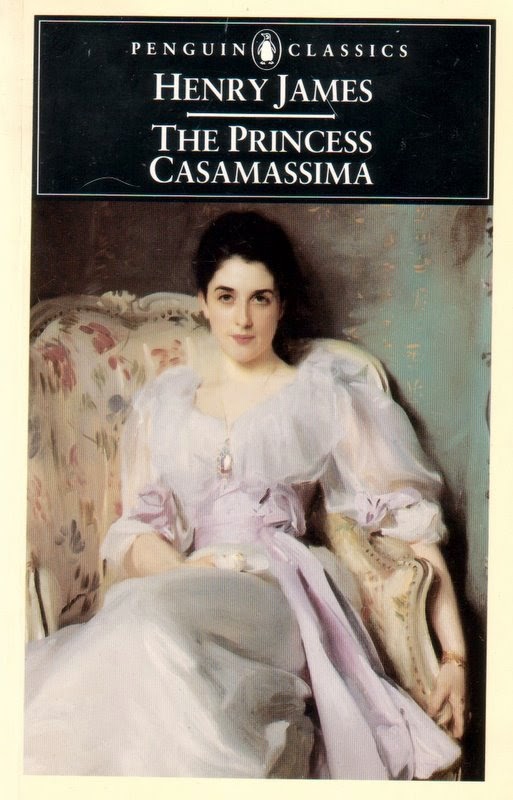
The Princess Casamassima - Henry James

After 6 years and many false starts, I have finally read this book. It was as painful as expected; there were many close calls where I almost "accidentally" lit it on fire, or dropped it out of the window of a fast moving vehicle or discovered an animal capable of ingesting large quantities of paper...(goats?) but alas, no animal came to my aid and in good conscience I can not cross off a book without seeing it through to the end...and if that means hours of my life that I will never get back, so be it. The only fathomable reason to write this book and/or include it in the Western Canon would be to serve as a counterpoint for all truly good books. Let's just say I couldn't rouse myself from my cocoon of apathy to even work up an emotion regarding the protagonist, Hyacinth. When, like his mythic namesake, Hyacinth's life is ended abruptly, two paragraphs before the book ends, I had to go back and reread what had happened to make sure he was really dead, which would have come as a shock if I was capable of feeling anything. For one tiny second I thought, "Hm, I did not really see that coming...but I guess I don't really care -" and then there were two paragraphs of his friends mourning the senseless loss of a life so young and brimming with potential, while I congratulated myself that I had finally made it through and day dreamed about the perfect reward for so painful a journey.

One of the things that's difficult about this book, is it is told in Jame's tranquil impressionistic style, where one learns of things as if being told the life history of a stranger at a cocktail party; only not their history, but rather the history of a first cousin once removed. Through the haze of boredom, one learns that Hyacinth is the bastard of a spirited French woman and allegedly an English nobleman. When the nobleman refuses to acknowledge that he has placed this woman in the awkward position of being an unwed mother, severing ties with her and leaving her cast off and downtrodden, the only solution left to this unfortunate woman is to shoot the lord. While she is left feeling vindicated for a nanosecond, she is then forced to spend the rest of her miserable days in a dank English women's prison. Her son is taken from her and given to an old friend and seamstress who is destined to spend the rest of her days wringing her hands out of a panoply of emotions and believing that Hyacinth, while technically an impoverished street urchin is really the son of nobility and as such destined for greatness.

Here, there is a bit of the nature vs. nurture discussion. Is the partial nobility that courses through young Hyacinths veins strong enough to conquer his baser nature? Despite the fact that he has been raised by a woman with a cockney accent, it seems as if the nobleman in him wins the day and he speaks perfectly respectable English, learns French within the span of 2 minutes and is better read than most of the peerage. He is dainty and frenchified in a way likely only in literature, and like his mythic namesake Hyacinthus, he is incredibly beautiful.

Disclaimer: I had never heard the story of Hyacinthus prior to writing this book report and in retrospect, knowing this myth makes The Princess Casamassima slightly more interesting. The myth goes something like this: Hyacinthus is a young, strong, super beautiful man of uncertain origin. He is so beautiful that Apollo kind of develops a thing for him and takes him under his wing, quickly teaching him the manly art of discus throwing. Unfortunately, during one particular lesson as Apollo throws the discus it goes off course killing the young and inopportunely placed Hyacinthus.

This helps shed a modicum of light on an otherwise frustratingly dull book that is ostensibly about the impotency of the English working class revolution. Instead, the environment of the malcontent provides a backdrop for a young man born into the wrong life at the wrong time. Despite being destined for greatness, our hero must take his place among the impoverished and the first book ends with him begging for theater tickets for him and his childhood friend, Millicent, who has now blossomed into a slightly crass but obligingly beautiful companion for our protagonist.

As they take their seats in the theater, within moments Hyacinth is summoned by the mysterious Princess Cassamassima, who is fascinated by the rumbling turbulence of the lower classes and views Hyacinth as an interesting specimen of this lower order. As Hyacinth chats up the princess he mentions that he too has an Apollo in the form of his good friend Muniment, the socialist agitator and revolutionary. And thus the skeleton of the narrative is revealed; Hyacinth, befriended by a socialist warmonger is immediately taken by this sinister world of intrigue and reprisals for the suppression by the upper classes. Finally his life makes sense; sprung at birth into the maelstrom and chaos of civil discord it seems as if he were destined from his very conception to stand up for the rights of the proletariat. If it were not for Princess C, perhaps Hyacinth who quickly pledges himself to martyrdom for the cause, would have gone about his life with a sense of solemn fealty to his fellow man.

Princess C offers a glimpse into an entirely different world order. After deciding for no apparent reason that she will make Hyacinth her pet and invite him to stay with her in the country, of course to strengthen their platonic friendship and have very long discussions about social well being, Hyacinth begins to have doubts about his glorious martyrdom. Doesn't he have just as much a right to this world as the dingy one he's momentarily left behind? Slowly the seeds of disillusionment are sown as he witnesses the simple luxuries of having a conspicuous income.

All of a sudden Pinnie, his step- mother of sorts, is taken ill and slowly (it felt like it took 50 pages) declines to the point of whispering her last fond remonstrances to Hyacinth and closes her eyes forever. Pinnie, a borderline impoverished seamstress who has only deteriorated at her profession over the years, has somehow managed to scrape about £100 together, which is a considerable fortune beyond the realm of actual feasibility. Hyacinth decides the best way to use essentially a four year income would be to quickly blow it all in Paris, after all isn't he French? Doesn't he have a right to see his paternal homeland? Within a short time (another 500 million pages filled with endless observations and conversational eaves dropping in coffee houses) he has spent his fortune and is now even more jaded by the cause then ever. He walks through the streets of Paris and is reminded at every corner of a failed revolution of the not too distant past. Is it really worthwhile to devote oneself to something so protean as the wants and desires of the masses?

The rest of the book is spent with Hyacinth dreading and regretting the pledge he has made. He is not a coward and refuses to renege on a vow...but it all feels so incredibly pointless. He has long walks through the park with his friend Muniment, and shorter and shorter visits with the Princess, until all visits and walks stop abruptly and he realizes the only solution left for him is to take his life.

The thesis that the things we love often lead to our destruction is a good one. Both foils, Muniment and Princess C, are revolutionaries, gods of war demanding vengeance for the socially vanquished, and pushing Hyacinth to throw his discus and deal the hand he's been given. Only, as so often is the case, where the discus lands can never be certain, and frequently leads a trail of bitterness and heartache in its wake.

Henry V - William Shakespeare

In this essay, I will examine the rhetorical and dramatic effectiveness of King Henry’s speech to the Governor of Harfluer in Act 3 Scene 4 ...